

If you bookmarked a “Salesforce Revenue Cloud” article a few years ago, quietly retire it. The product has been rebuilt twice since then, renamed twice, and folded into Salesforce’s broader AI push. What used to be a CPQ add-on is now a full quote-to-cash platform with agents doing a good chunk of the manual work.
Quick answer: Salesforce Revenue Cloud is the platform formerly known separately as CPQ and Billing. Salesforce rebranded it to Revenue Lifecycle Management in Spring ’24, then Revenue Cloud Advanced, and at Dreamforce 2025 it became Agentforce Revenue Management, the current name. It’s still commonly searched and referred to as “Revenue Cloud,” and it now runs on the Agentforce 360 Platform with AI agents built into quoting, billing, and renewals.
This piece resets the record. We’ll cover what the platform actually does today, why teams still choose it, how it compares with the legacy CPQ most people remember, and where Cloud Odyssey, a Salesforce Summit and MuleSoft partner, fits into an implementation.
What Is Salesforce Revenue Cloud (Agentforce Revenue Management)?
Revenue Cloud is Salesforce’s end-to-end system for managing everything between a quote and a payment: product catalog and pricing, CPQ, contracting, order orchestration, billing, invoicing, and revenue recognition. Instead of stitching together separate tools for sales, finance, and operations, everything runs on one data model, native to the same platform as Sales Cloud and Service Cloud.
The distinction that trips people up: Salesforce CPQ (the old managed package, born from the 2015 SteelBrick acquisition) only handled configuration, pricing, and quoting. Revenue Cloud absorbed CPQ as one module inside a much larger system that also owns contracts, orders, billing, and analytics. If your team still thinks of “CPQ” and “Revenue Cloud” as two separate purchases, that’s outdated. CPQ is now a component, not a standalone product, and Salesforce has closed new sales of the legacy CPQ package.
A Short History, Because the Name Keeps Changing
Knowing the timeline helps when you’re evaluating vendors, RFPs, or old blog posts (including our own, apparently):
- 2015–2020: Salesforce CPQ and Salesforce Billing exist as two separate managed packages with separate data models.
- November 2020: Salesforce bundles CPQ, Billing, Partner Relationship Management, and B2B Commerce under the “Revenue Cloud” brand, but the underlying architecture is still the old package stack.
- Spring ’24: Salesforce launches Revenue Lifecycle Management (RLM), a native, API-first rebuild rather than a rebrand.
- Dreamforce ’24: RLM is renamed Revenue Cloud Advanced (RCA).
- Dreamforce 2025: The platform is folded into the Agentforce story and renamed Agentforce Revenue Management, with AI agents built directly into quoting, contracting, billing, and renewals.
Same underlying platform, three names in four years. If you’re comparing quotes or scoping a project, it’s worth confirming which era of the product a vendor or consultant is actually talking about.
9 Reasons Revenue Teams Are Choosing Salesforce Revenue Cloud Right Now
1. One platform instead of five disconnected systems
The original pitch for Revenue Cloud hasn’t changed, even if the plumbing has: CPQ, contracting, order management, billing, and revenue recognition sit on a single data model instead of bolted-together point solutions. That removes the reconciliation work that used to happen between a CRM, a quoting tool, a billing system, and a spreadsheet nobody trusted.
2. AI agents that generate quotes and explain invoices
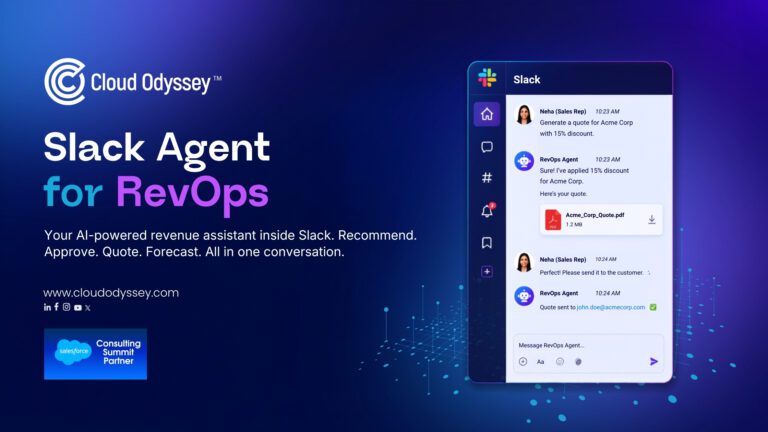
This is the biggest functional shift since the original CPQ days. Sales reps can now ask an AI agent to build a compliant quote using plain language. A billing agent can explain a complex invoice line to a confused customer without a human ticket. Renewal and consumption monitoring runs in the background instead of relying on someone remembering to check a dashboard. These aren’t chatbots bolted on for a keynote demo — they’re built into the day-to-day quoting and billing workflow.
3. Real pricing flexibility for complex deal structures
The configurator now uses constraint-based logic (with Constraint Modeling Language for the genuinely complicated cases) instead of rigid bundle rules. It supports fixed, tiered, volume, matrix, and usage-based pricing, ramp deals across multiple years, and scheduled price uplifts — all from a single quote line editor rather than a maze of related lists.
4. Purpose-built for subscription and usage-based revenue
Retrofitting an old transactional billing system to handle subscriptions and consumption pricing was always painful. Revenue Cloud was built with token grants, commitments, and consumption-based rating engines in mind, which matters more every year as more B2B companies move toward usage-based pricing.
5. Compliance that finance teams don’t have to build themselves
Revenue Cloud supports ASC 606 and IFRS 15 revenue recognition out of the box, which cuts down on the manual reconciliation and audit risk that comes with recognizing revenue in a spreadsheet or a bolted-on finance tool.
6. Native integration with the rest of your Salesforce org
Because it runs on the Agentforce 360 Platform, Revenue Cloud shares the same data model, security layer, and interface as Sales Cloud and Service Cloud. There’s no middleware tax for basic connectivity between the tools your reps and support agents already use daily.
7. Real-time revenue analytics, not month-end reporting
Dashboards built on Tableau Next track ARR, MRR, churn, pricing effectiveness, and order fulfillment status in real time instead of waiting for a monthly export. That shortens the gap between “something is going wrong with renewals” and someone actually noticing.
8. It scales without a re-platforming project
Multi-currency, multi-entity, and multi-GAAP support mean a fast-growing SaaS company and a global manufacturer can run on the same core platform, scaling transaction volume and organizational complexity without switching systems a few years later.
9. Composable rollout, you don’t have to buy it all at once
Revenue Cloud is composable by design. Teams can start with CPQ and quoting, add billing later, and layer in advanced order orchestration when they’re ready, rather than committing to a big-bang implementation of every module on day one.
Salesforce Revenue Cloud vs. Legacy CPQ: What Actually Changed
| Legacy Salesforce CPQ (pre-2024) | Agentforce Revenue Management (current) | |
|---|---|---|
| Architecture | Managed package, separate from Billing | Native to Salesforce Core, API-first |
| Configurator | Rule-based bundles | Constraint-based, supports CML |
| Data model | SBQQ Quote Line objects | Transaction Line Items |
| AI | None | Agentforce quoting, billing, and renewal agents |
| Analytics | Basic reports | Tableau Next dashboards, real-time |
| New customer availability | End-of-sale | Current offering |
If you’re running the legacy managed package today, it isn’t disappearing overnight; existing customers keep support and renewal rights, but any new build should assume the Agentforce Revenue Management architecture, not the old CPQ patterns.
What Results Look Like in Practice
The gains vary by industry, but the pattern is consistent: less manual reconciliation between sales and finance, and fewer errors from products or pricing that live in three systems instead of one. SaaS companies moving multiple product lines onto a single CPQ and billing engine typically see quote generation speed up dramatically and billing errors drop. Manufacturers with distributor pricing tend to see the biggest wins in quote approval time and forecast accuracy once pricing and contract visibility are centralized. In our own Revenue Cloud implementation work, one client with genuinely complex pricing and contract processes needed a CPQ and CLM setup that could accurately manage quotes, pricing, contracts, and renewals in one place- the kind of problem Revenue Cloud is specifically built to solve.
Cloud Odyssey’s Take
Most “Revenue Cloud” content still online describes a product that doesn’t exist anymore: the standalone CPQ-plus-Billing bundle from 2020. That gap matters, because teams scoping a project off outdated information tend to underestimate what the platform can now do on its own (AI-generated quotes, real-time revenue dashboards, agent-assisted billing explanations) and overestimate how much custom development they’ll need to build it themselves.
Our view: Revenue Cloud earns its place on a shortlist today not because it’s a bigger CPQ, but because pricing, contracting, billing, and revenue recognition finally share one data model instead of three. The AI layer is genuinely useful for quote generation and renewal monitoring, but it’s not a substitute for getting the underlying pricing model and product catalog right first — that foundational work is still where most implementations succeed or stall.
If you’re weighing a fresh implementation, a migration off legacy CPQ, or just want a second opinion on scope, talk to our Revenue Cloud team. We’ve run these projects across SaaS, manufacturing, financial services, and retail, and we’re happy to tell you honestly whether Revenue Cloud is the right fit before you sign anything.
Frequently Asked Questions
Yes. It’s now called Agentforce Revenue Management. The core platform and capabilities are the same evolution of Revenue Cloud; the name changed to reflect the AI agents built into the product.
No. CPQ is one module inside Revenue Cloud, covering configuration, pricing, and quoting. Revenue Cloud also includes contract lifecycle management, order orchestration, billing, invoicing, and revenue analytics.
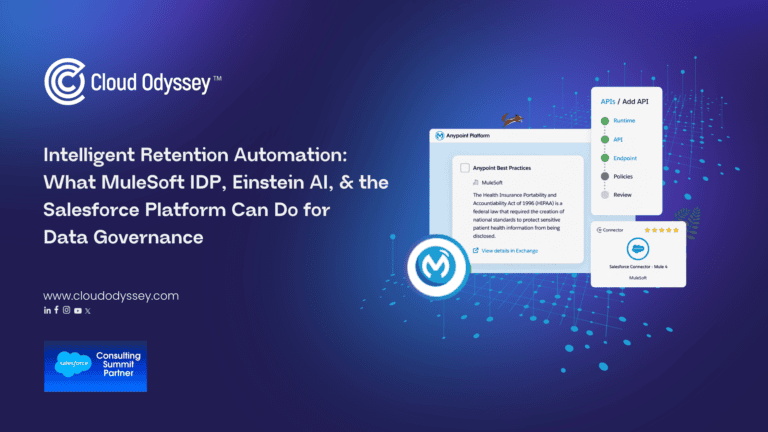
Yes. It exposes REST APIs and supports integration platforms like MuleSoft for connecting to ERP systems, payment processors, and data warehouses, which matters most when billing data needs to flow into revenue recognition downstream.
Sales reps use CPQ to configure deals and generate quotes, revenue operations teams manage order fulfillment, and finance teams handle billing, invoicing, and recognition, all from the same underlying data.
Not necessarily. Migration paths exist from the legacy managed package, though the scope depends on how customized your existing configuration is. This is usually the first thing worth scoping properly before committing to a timeline.